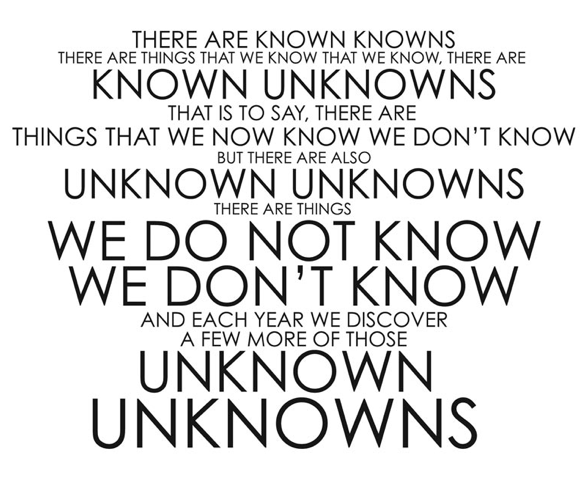
Salmon, Avocado, and Cucumber Makizushi (Sushi Roll)

Finally did it. I’ve had this on my list of annual things to do since 2008: learn how to make sushi. Toughest part was finding a bamboo mat! For our sushi roll, we looked at MakeMySushi.com (classic roll recipe) and used our own desired filling (salmon, avocado, and cucumber). Rather than rewrite all the instructions, I’ll provide some of our own hints:

  • Drink sake. It’s really really good. We had ours chilled.
  • Let the sticky rice cool before rubbing it on the nori.
  • Using the bamboo mat, roll it really tight while making sure the filling doesn’t fly out the ends.
  • Wipe (with paper towel) and wet (with hot water) your knife after every cut (or every few cuts).
  • Be creative with the filling. We started with a simple combo but after two rolls, realized we were pros and graduated to a philly spiced roll (added cream cheese and chili powder).
  • Make some extra and take it to work. That was a really good lunch on Monday…

That’s about it. It was pretty damn easy looking back, so give it a go!

Blueberry Banana Applesauce Muffins with Brown Sugar Cinnamon Streusel

Difficulty: Easy
Prep Time: 15 min
Bake Time: 18-24 min

Ingredients – Muffins
1 1/2 cups all-purpose flour
3/4 cup white sugar
1/2 teaspoon salt
2 teaspoons baking powder
1/3 cup vegetable oil
1 egg
1/4 cup milk
1 tsp vanilla extract
1 cup fresh blueberries
1/2 mashed banana
2 Tbsp applesauce

Ingredients – Streusel (Crumb Topping)
1/2 cup white or brown sugar
1/3 cup all-purpose flour
1/4 cup butter, cubed
1 1/2 teaspoons ground cinnamon

Directions
1. Preheat oven to 400 degrees F (200 degrees C). Grease muffin cups or line with muffin liners.
2. Combine and mix dry ingredients. Add liquid ingredients (but not the fruit). Add the applesauce and mashed banana. Fold in the blueberries.
3. Separately, mix the ingredients for the streusel with a fork.
4. Fill muffin cups right to the top and sprinkle with crumb topping mixture.
5. Bake muffins for 18 to 24 minutes in the preheated oven, or until done. Don’t overcook, realizing the muffins will continue to cook a bit once removed from the oven.

Waves, Coherence, & the Origins of Inspiration

So I’ve taken a few months off from writing – not because I’ve been out of thoughts and ideas but because I’ve just wanted to take some time to reflect on my thoughts and ideas to date. I’ve wanted to somehow soak it all in and envision a larger realm of thoughts and ideas emerging in my life. I’ve wanted to ride a different psyche wave for a bit – one of absorption and reflection rather than construction and emission.

Waves, phases, and cycles are a major part of our lives. Some are natural, some controlled, and some just plain impossible to understand. Some can be calculated and predicted while others come completely unexpected. What drives these waves and cycles, and how does the combination (or interference) of multiple waves in our lives affect our overall well-being and happiness?

In the physical world, the relation (or correlation) between multiple waves can be described or denoted by something called coherence – how much their phases differ and, when combined, what the resulting wave might look like. Let’s think of coherence for our psyche wave as our level of well-being and happiness that results from the combination of all the waves in our life.

To look at this idea in more detail, we can identify several waves and cycles in our lives: seasons, weeks, days, running and working out, our diet, relationships, playing sports, volunteering and giving, sleep cycles, dreaming big, acting small, being social, feeling courageous, extreme happiness, comfort and security, professional experience, travel, spending and saving, learning and teaching, new thought, and well, on to infinity with this list.

Well, this is where it gets tough. Given the complexity and often complete unpredictability of these waves and cycles, how can we ever determine what our resulting psyche wave will look like, or at least what it should look like? How can we identify the properties of these waves – that is, how frequently they come around, how high they take us, how low they take us, how they change in time, what interactions they make with other waves, and what really drives them from the get go?

These may be questions for many millennia, but I want to look at the most general driver that I’ve been thinking about a lot recently: inspiration. The source of true inspiration is seemingly quite unpredictable yet it is the major driver of a peaking (or cresting) psyche wave of well-being and happiness.

From where does one find inspiration? Is it something to be harnessed and propagated, or is its movement about society entirely beyond our control? From where do we find the courage to venture and the fuel for adventure, the motivation to take on the world and the drive to motivate the world around us? Is inspiration in itself a natural cycle of crests and troughs or can we deconstruct it into its own understandable DNA? What drives the waves of inspiration?

In my search for the end of the internet, I found an interesting post on inspiration by “Duff McDuffee” on Precision Change, a personal development blog. Thank all Gods, earthlings, and minerals for the internet! Duff spends most of the time summarizing several unique realms of thought surrounding the origins of inspiration but most notably concludes with some very compelling ideas:

“Inspiration is the natural and automatic drawing in of spirited experience, just as inhalation is the natural drawing in of breath. You cannot force inspiration any more than you can force an inhale. Just as inhalation happens naturally as long as you don’t try to control it, inspiration also happens naturally and is just as near and easily available.

Inspiration comes from the same place that dreams come from. It is a place beyond understanding, knowing, and controlling. Inspiration is born of naturalness, of being, of attunement to spirit. When you stop controlling and start listening, inspiration naturally arises.

Inspiration is also wild, mysterious, and unknowable. Inspiration is the stuff of pure creativity. It cannot be measured, predicted, or controlled.”

So inspiration is natural like breathing, mysterious like dreams, and immeasurable like pure creativity? But what about sunsets, hymns, good naps, lasagna, beaches, speeches, births, deaths, memories, wins, losses, and the moments that take our breath away? What about the performances, trips, meetings, phone calls, churches, hikes, and wonders of the world?

To me, inspiration just comes in many forms, expected and unexpected, natural and brought forth by our own acts. Sometimes we can find it easily, and sometimes we can’t. But the key is that we can learn about it, and learn about it we do. As we grow older, see the world, and interact as a society, we can learn about the origins of inspiration. As we learn about it, we can harness it, maintain some coherence between multiple waves, maximize our collective peaks, and maintain the highest level of well-being and happiness. To me, that’s pretty inspiring.

World Statistics Day and the Importance of Statistics in Government

The most recent issue of Amstat News features a wonderful summary of the first ever World Statistics Day, which just occurred on October 20, 2010. The article features a series of quotes from the chief statisticians at various U.S. government agencies, all of which serve as a great overview of the critical importance, broad applicability, and growing need for statistics and statistics professionals in the U.S. and around the world. Collectively, we must embrace not only the numbers, data, methods, analyses, and reports, but also the conversations and the debate around such components. In a world heavily fueled by data, I’m very glad that statistics is gaining more international awareness and recognition so that all our lives can be bettered by more informed decisions and debates.

“Statistics produced by the federal government inform public and private decisionmakers in shaping policies, managing and monitoring programs, identifying problems and opportunities for improvement, tracking progress, and measuring change. The programs of our statistical system furnish key information to guide decisionmakers as they respond to pressing challenges, including those associated with the economy, agriculture, crime, education, energy, the environment, health, science, and transportation. In a very real sense, these statistics provide data users with a lens to focus the myriad activities of our society into a more coherent picture of the status, progress, and trends in our nation. The ability of governments, businesses, and individuals to make appropriate decisions about budgets, employment, investments, taxes, and a host of other important matters depends critically on the ready availability of relevant, accurate, and timely federal statistics. Our economy’s complexity, growth, and rapid structural changes require that public and private leaders have unbiased, relevant information on which to base their decisions.”
– Katherine Wallman, Chief Statistician, Office of Management and Budget and Past President of the ASA

A few more important (and relevant) statistics resources can be found at:

Listening, Lighting Fires, and Laughing Uncontrollably

“It is the province of knowledge to speak, and it is the privilege of wisdom to listen.” – Oliver Wendell Holmes

Listening is an enabler, for love, learning, understanding, advising, taking action, and a whole lot more. Listening allows us to process speech, convert emotions, build thoughts, and plan reactions. Listening balances expression; if our speech, tone, and visible emotions lift us up, it’s our ability to subsequently listen that gets us back on the ground.

But a problem is that listening requires input – input that is not always there and is entirely dependent upon another party. It’s not entirely common that the speaker knows what to say or is able to sufficiently express the thoughts, ideas, and feelings that tread his or her mind.

Accordingly, the responsibility to effectively navigate this two-way street goes to both parties. As a listener, it’s important to enable effective input through a variety of measures, such as setting the tone, establishing trust, and asking the right question.

An additional tactic for effective two-way communication that enables the most intellectually profitable form of listening, is to light a fire that is easily put out. By lighting the light fire – an easily distinguishable one that gives the reader some initial motivation – more valuable data is exchanged between parties, fueled by more sincere emotion of those parties. As a result, our collective knowledge grows and wisdom prevails while the relationship still gets stronger.

Listening is not just sitting back and acting interested; listening is active participation in the conversation, and in particular, invoking in the speaker the right drivers for speech and expression. At the end of the day, we are all people, and all have things to say, opinions to share, and feelings to express. We should embrace each conversation as a two-way street and ensure we optimize the result of that conversation by using all tactics at hand. Let’s all be active listeners.

“To listen well, is as powerful a means of influence as to talk well, and is as essential to all true conversation.” – Chinese Proverb

Well my post is actually done, but as I was scanning the web for some good images that might be representative of the above, I somehow stumbled on this one below, and burst out laughing as a result. C’mon, that’s worth a good hearty chuckle!


Six Sigma, Switching Spices, and Embracing the Slight Deviations in Life

Although in many aspects of life we must minimize variation to obtain desirable outcomes, it’s when we embrace the slight deviations from normalcy that we obtain leverage, advancement, and enrichment.

Six Sigma

Six Sigma, developed by Motorola in 1981, is a “rigorous and disciplined methodology that uses data and statistical analysis to measure and improve a company’s operational performance by identifying and eliminating defects.” In other words, it’s a business management strategy that seeks to minimize variation in operational processes to obtain desirable results for that business/industry.

For manufacturing, production, risk management, supply chain management, accounting, customer service, and many other traditional business functions, minimizing variation is critical for ensuring sustainability, accountability, and efficiency. If the outputs of these functions deviated from what was to be expected, well, it could be expected that the people, the business, and the industry could all be severely impacted at some level.

But in order to spur innovation, create new channels for business, and adapt to markets and mediums that are constantly in flux, these businesses must foster and embrace the slight deviations from what is traditional or expected. There are incredible resources available to allow for these deviations to be leveraged without enormous risk to the bottom line, public image, or financial outlook:

  • The internet is an amazingly efficient platform to test new strategies, engage with the public, and collaborate with the universe.
  • Statistical methods supply new insight to what may have been and what might be, should this or that occur, with one thing or another considered.
  • Social networks can be easily tapped and leveraged for business insight. More is understood about behavioral patterns and social networks than ever before, allowing more direct correlation of business decisions to societal impact.

Business functions, organizations, and entire industries can be bettered by embracing and running with such deviations, even if the short-term prospect could be unknown and questionable. Balancing normalcy with cultured variations is a mixed business strategy that provides leverage within that market, advances industry, and enriches society.

Switching Spices

Let’s move from biz to grub. Think of cooking as a math problem. Ingredients are your variables/inputs, methods are your coefficients/operators, and your dish is the output. Given the huge number of ingredients and spices, cooking and plating techniques, and methods of consumption, the range of outputs is somewhere around or above infinity. But given that our options are so vast, it’s amazing how much the output might change if just one of our inputs is changed.

The dish is our dynamical system. Sometimes all it takes is turning up the temperature, or maybe adding more juice, or switching a spice, and the dish becomes entirely new. This is math and food in bed together – the application of chaos theory to culinary experience – making slight deviations from recipes and “comfort-zone” cooking to find new dishes worth trying, sharing, and bragging about.

As much as cooking is an experience, it’s also an experiment. There may be structure – in terms of baking methods and recipe books and kitchen etiquette – but in reality, the door is wide open. Ingredients are for the using, and recipes are for abusing. The best dishes are the unexpected ones, the ones that deviated from expectation, the ones that turned from trial and error to don’t-want-to-share. The mistakes are worth making, for it’s the hundreds of bad pasta dishes that lead to the thousands of great ones. Without embracing the variation in cooking, well, we mind as well hook up to the same gas pump each day.

And lastly, if the world of cooking was its own planet, every inch of it would be covered with a different species, color, scent, appearance, and shape. There is an infinite number of combinations of ingredients, quantities, temperatures, styles, and dishes to consume. Sometimes just switching one spice with another or stirring a little less makes all the difference in making your palate happy and opening a world of new potential dishes. Embracing slight variations in cooking will create new kitchen opportunities, expand your breadth of culinary knowledge and experience, and enrich your palate with a vast array of potential flavors.

Adaptive Normality

So what would our world look like if everything was constantly normal? Would we even have a concept of normality? With no variation from what has been done previously, we would essentially cease to learn, experiment, discover, and grow as a society and civilization.

What makes individuals unique makes many individuals stronger.

Our characteristics give us dimension. Our characteristics – from eye colors to expressions to birthmarks – give us each an identity that we own while making our society as a whole much stronger, multi-dimensional, and poised to grow.

Our choices give us direction. Our choices – from picking a college to financial spending habits to lending a hand – fuel and steer us down towards success and happiness, down roads that sometimes seem endless, foggy, and even non-existent.

Realizing that much good in our lives is based on slight deviations from normality, we must continue to pursue opportunities away from the norm. We must adapt our conceptualization of normality from a straight line to one that constantly moves and includes the variation in life. Our threshold for risk must include these slight deviations so we make them a part of our everyday life. Pushing the envelope in multiple ways brings advancement and enrichment. Divergent thinking, trying new dishes, and taking roads less traveled are all small deviations worth embracing. Although it’s normalcy that might keep us standing, its variation that moves us forward.

Fresh Tomato Sauce with Chorizo Sausage Over Penne

Problem: Needed a good home-cooked meal for Sunday, something fun to prep, slow to cook, and with a smell to fill an apartment all afternoon while football is on.

Solution: Fresh tomato sauce with chorizo sausage over penne, with ricotta cheese on the side.

Details: Sauteed onions and garlic in olive oil, cooking the sausage over medium heat to brown the sides. Add some fresh basil leaves and chopped fresh tomato, with some spices and black pepper. Add a can of chunky crushed tomatoes for more volume and substance. Let simmer for a few hours.

Plate: Mix some of the sauce with the penne, pour some more sauce over the top, garnish with fresh basil leaves, and have the ricotta on the side. Grated cheese and fresh ground black pepper on top.

Beverage: 2% milk or glass of red wine. Both incredibly satisfying and pair well with the dish.

Knowns, Unknowns, and Aether Abound

Much of our lives is about problems and solutions. Faced with a barrier, we find a way to knock it down. Presented with a challenge, we work to overcome it. Our collective problems bring us together, and our collective solutions make us safer, stronger, and happier.

These problems come in many shapes and sizes: math problems, career problems, logistical problems, emotional problems, physical problems. Rather than maintain special problem solving techniques for individual problem types, we can expand our methods into a global group, and learn from one type what may be helpful for another. Sticking with math – a common language and underlying framework of nature and intellect – we can relate our methods for solving math problems to the rest of the world around (and above us).

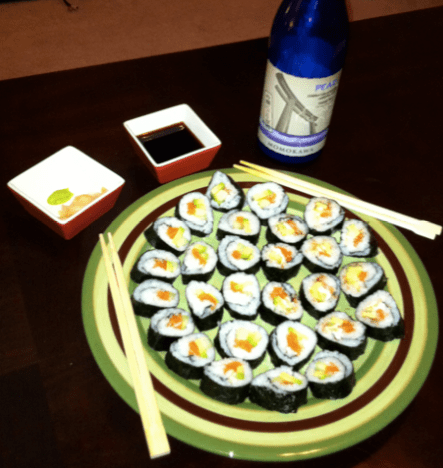
There is an innate simplicity to many math problems: there are knowns and there are unknowns. The solutions often reside in the application of methods and operators to the knowns to determine one (or all) of the unknowns. Therefore, the first step is often determining what is known and what is unknown. Although, this notion has been most popularly  represented by set theory (a foundational system of mathematics that deals with collections of objects), this concept has been the spark for other applied methods and disciplines through which many more complex problems are tackled in today’s society.

In game theory, a player’s strategy can be represented by differentiating the sets of moves that could make positive gains versus those that could make negative gains, given the possible situations at each stage of the game. Closely related is decision theory, where we look for the pros and cons, uncertainties, and rationalities behind potential decisions to determine an optimal course of action. In chaos theory, we define initial conditions and explore how the behaviors of some dynamical systems change as those knowns vary or as unknowns are introduced into the system.

To delve deeper into the questions of known-unknown identification, set theory, and related applied methods, we can think about a problem that began on day one, has no end in sight, yet has made incredible progress over centuries in terms of approaching a solution: what’s above us? What’s with the sky, the planets, the stars, the universe – the aether that surrounds us?

Is the total set of knowns and unknowns about the universe infinite? Does a new known always present us with a new unknown? Is the same true for every problem, or just some? For which types of problems might this be true? Are we better at approaching a solution collectively or as individuals? How can this be determined at the onset of a problem? If the set of unknowns has no limit or boundary, is the solution intelligently impossible? Does a single element of randomness deny a complete solution from every being possible? Are we better off existing without a solution? Or would we be complete with a world of all knowns?

I fundamentally believe that we find meaning in life through the unknowns, not the knowns. The set of unknowns is infinite, and it is our drive to understand unknowns and, in general, the curiosity into the mysterious world that provides completeness. The knowns give safety, guidance, comfort, and pleasure.

For all problems we face, and as with the aether abound, we can continue to move forward, learn what we know, and question that which we don’t know. We can start with sets – knowns and unknowns – and move from there. Problem solving can be simple, if you start simple. As for the things we don’t know we don’t know – the unknown unknowns – well, we better stay curious with the mysterious, and just be happy for that.

Update #1: 2010 MLB Baseball Season Predictions

Well not bad I must say. The AL East is tightening up although with news that Youkilis might be out for the season, the Red Sox seem to be fortunately getting farther away from the playoffs. Here’s how my predictions have looked so far:

Current AL East Standings (08/02/2010)
New York Yankees 66-39 (62.9%)
Tampa Bay Rays 66-39 (62.9%)
Boston Red Sox 60-46 (56.6%)
Toronto Blue Jays 55-51 (51.9%)
Baltimore Orioles 32-73 (30.5%)

Predicted AL East Standings (04/10/2010)
New York Yankees 101-61 (62.3%) -0.6%
Tampa Bay Rays 94-68 (58.0%) -4.9%
Boston Red Sox 92-70 (56.8%) +0.2%
Toronto Blue Jays 78-84 (48.1%) -3.8%
Baltimore Orioles 76-86 (46.9%) +16.9%

Average difference in prediction (absolute value, all teams) = 26.4% / 5 teams = 5.3%
Average difference in prediction (absolute value, w/o Orioles) = 9.5% / 4 teams = 2.4%

Predicted Playoff Bound (04/10/2010)
AL East: New York Yankees (Very Good Possibility)
AL Central: Minnesota Twins (Good Possibility)
AL West: Seattle Mariners (Not Possible)
AL Wildcard: Tampa Bay Rays (Very Good Possibility)
NL East: Philadelphia Phillies (Good Possibility)
NL Central: St. Louis Cardinals (Good Possibility)
NL West: Colorado Rockies (Slight Possibility)
NL Wildcard: San Francisco Giants (Good Possibility)

Predicted Most Valuable Players (04/10/2010)
AL MVP: Alex Rodriguez (Possible as he’s 2nd in RBIs, although it’s probably going to Miguel Cabrera)
AL Cy Young: CC Sabathia (Possible as he’s got 13 wins and a 1.36 WHIP, although David Price might be the best candidate right now)
NL MVP: Albert Pujols (Good Possibility)
NL Cy Young: Roy Halladay (Good Possibility)

Focus, Balance, and Strength

One is for focus, two for balance, and three for strength. From the most basic sequence of integers we can understand critical characteristics and qualities that, in a sense, provide a backbone by which we can be happy, learn, and grow.

One is one. There is nothing to surround it, there is nothing to be bent. It’s the focal point of many, and the starting spot for all. Above one comes everything else and into one everything comes.

Our society puts a lot of focus on one. We like to see a single result and hear a single voice. We want to find our soul mate and discover the holy grail. We seek to structure our world by its basic individual units, the atoms and nodes. We break down our problems into individually digestible chunks. One is the basic unit of math, the center of gravity, the perfect result. One is the focus and concentration of everything else.

But one stands alone. Where one is one, one is only one. One would be none if no two came from one.

Two is the balance of ones, the pairs of nature, the couplets of science, the squares of math, the rhythm and meter of poetry. Two is evenness and congruence. Two is good and evil, hot and cold, yes and no, high and low, winners and losers, protons and electrons, male and female, life and death. From two we can find harmony and bliss and make connections not previously seen by focusing on one. Two is love. Love is two. Two is the threading of life and the creator of balance within the cosmos. Two is the secret order within disorder, through connections and relationships that make us more than one.

But two still lacks shape. Where two is two, there is only one view of two. Two would be one if no three came from two.

Three is the unit of strength, the shape of our space. It represents our current (most common) perception of spatial dimensions. Three is triangulation, inflection, exponentiation, and curvature. Three is the operation and its result – a combination of the whole picture. Threes provide motion and non-linearity, a dynamic quality of life. Threes make twos unique and unbounded while making stronger our threads. Three is two and one together, forging balance and focus for strength.

Three is the strongest number. Geometrically, the triangle is the only shape that cannot be deformed without changing the length of one of its sides. Spatially, three provides dimension and perception. Three is our basic unit of existence and reality, and well, most of our buildings too.

Three also represents complexity in knowledge. If two is the threads, three is the knots. Three is multiple connections – knowledge with shape. Tie two threads together and you’re building new shapes, discovering new binds, making new questions for answers worth seeking.

And triplets are an optimization of our minds. Remember two things and you could have remembered a third. Try to remember four things and you are likely to leave one out. Triplets are an innate unit of the human mind, something by which we are all naturally bound.

Focus, balance, and strength. With three we find strength, and from three we derive balance and focus. Three qualities that make us better individuals, partners, and citizens. Three qualities that, if we learn to utilize and optimize through our life, will surely better our professional, personal, and spiritual lives.

And at the end of the day, numbers are an underlying language of life. We can look to numbers to represent many aspects of life – both physical and philosophical – to help understand how we interact, how we grow, and how to succeed. Looking at a simple sequence of numbers can provide insights that are easier to understand in a world of infinite space and color. Numbers help provide shape to our thoughts and can thread our understanding across cultures and generations. Now did somebody say math is boring? 🙂