Looking Back On 2009

What do you hope to accomplish in 2010?

On January 1st of every year since 2007, I’ve listed ten things I would like to accomplish in the coming year. There’s no punishment for not completing an item and there’s no reward for completing it either. However, I like to use it as a foundation for the year to come and for something to look back on in memory to see where my desires stood at the beginning of each year.

I actually did pretty well in 2009, accomplishing 8 out of my 10 items. Here they are:

1. Go Camping – Although Christine and I went to Wintergreen, Virginia for hiking etc. in the early fall, I’m not sure I can count this as we stayed in a resort cabin and not a tent at a campsite. The campfire, scenery, smell, feel, and enjoyment were all there though!

2. Write and Submit a Poem to a PublicationSubmitted some selected poems from The Adsideologist to Strong Verse, and online poetry magazine.

3. Shoot Under a 95 in Golf – Shot a 94 at East Potomac (par 72) in the early summer. Must have been the hot dogs and beers!

4. Go Skydiving – I’m not really upset to have missed this one though. I’ll find plenty of other adventure gigs with less risk (see “Human Catapult” and “Flanas Flyer” circa 1998-1999)…

5. Memorize 50 Digits of Pi – 3.14159265358979323846264338327950288419716939937510… I had it down perfectly in January but lost it soon thereafter. I’m close enough so I’m counting it.

6. Get a Pet – I became a lucky father of Lil Santino the Fish (he’s on Twitter too) in March. He is a good boy and is a lot less stressed after leaving his job at Long John Silvers back in July.

7. Go to the New Yankees Stadium – Say the Yanks lose to the Rays 9-7 on Saturday, June 6. Bummed to see a loss but such a great experience, especially considering they won the big one this year for the 27th time!

8. Consolidate Investments – Moved three old 403b accounts into a traditional IRA. It was a long process, a lot of paperwork, and time spent on the phone, but very much worth it.

9. Volunteer/Coach – Started volunteering at The Reading Connection and have been coaching an indoor soccer team (not to mention we won the championship).

10. Begin and Continue to Publish a Personal Blog – Check!

Not too bad! So what’s on my 2010 list? That’s for me to know and you to possibly find out at some point in the future. Until then, have a safe, healthy, and happy 2010!

Boundaries Of The Human Condition

“That ideas should freely spread from one to another over the globe, for the moral and mutual instruction of man, and improvement of his condition, seems to have been peculiarly and benevolently designed by nature, when she made them, like fire, expansible over all space, without lessening their density at any point, and like the air in which we breathe, move, and have our physical being, incapable of confinement or exclusive appropriation.” – Thomas Jefferson

There exist many concepts and rules by which we are bound, some of which we may be aware and some of which we may not be aware. Those concepts and rules of which we are aware exist throughout nature and space because we can observe them and learn them, manipulate them and control them, and hear them and speak them. Those concepts and rules of which we are not aware exist because we cannot observe them and learn them, manipulate them and control them, and hear them and speak them. In a sense, we are bounded by that which we can know and cannot know – although those boundaries can and will change throughout the course of history.

It’s interesting to think about our intellectual boundaries, limits, and intersections because they can be sliced and diced a thousand and one different ways. To a chef, his or her capacity may be bound by a colander, letting some things in and others out, clogged and dirty at times and crystal clear at others. To a biologist or chemist, he or she may see it as some semi-permeable membrane that expands and contracts, filters substances based on the needs of the whole system. And to an astronomer, the boundaries may be the vast unknown of our universe: with new discovery always comes more knowns coupled with more unknowns.

Regardless of the profession, it’s valuable to think about. For me, I’ll gladly wear the shoes of a different scientist each waking day but to start, here are a couple different categorizations of our intellectual boundaries, just to jot some thought.

Spatial Dimensionality

Think of our intellectual capacity as bounded by one big room. This room can grow as it’s supported by more material, can shrink with the absence of structural connections, and can lose energy with a loss of insulation, cracks in the windows, etc. It can become more complex or simple in a hour’s time with the addition or removal of new features and can take on a new look and persona with the manipulation of a few simple characteristics such as paint and fixtures. You get the point.
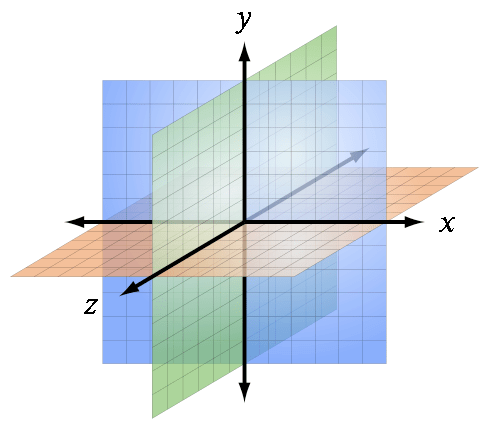
Walls – The walls are the support and protection, and are the primary means by which we are bound. The walls are our rules of lateral movement, being, and knowing. In a room of infinitesimal walls, we’ll find just as many corners (getting us ever close to the perfect circle) but we’ll still be limited by a surrounding perimeters. In our room, the walls are our physical concepts, our school subjects, our theorems and laws, our rules of society.

Floors – The floors are our foundation. Without the floor we would not be able to maintain our position and as a result, move from one position to another. The floors are our foundation for thought – our family, our circumstance, our physicality – our reference point.

Ceilings – The ceiling is our limit. The ceiling provides cover and security, shape and reflection, and a foundation for belief and new thought. The ceilings are our hypotheses and conjectures, our gateway to the unknown as much as it they’re the gateway for belief and clarity of vision.

Corners – The corners are the intersections of life, the crossroads of knowledge and new thought. Every corner is formed by the other structures mentioned above. The corners are the relationships, the interdisciplinary nature of life, the idea that everything is connected.

Existential Dimensionality

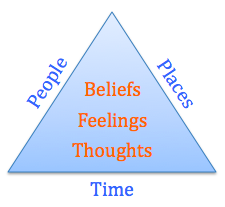
Now think a bit differently. Think that our intellectual capacity is bounded by core concepts which, when intersected, form feelings, thoughts, beliefs, and understanding. The core concepts are the things we should study – the basics of existence from which we should gain our foundations. I spoke about studying people earlier, with an overview of Archimedes. For the places, I’ll talk about some of my 2010 visits in the near future. And for time, we’ll it’s the scale by which we can make sense of history, and the perception and reasoning that comes with it. The triangulation of these three things gives an enclosure of feelings, thoughts, and beliefs that form the boundaries of our intellectual capacity.

People – We are who we are as much as we are who we’re with (and who used to be with us). To feel, learn, and think, we must understand how other people feel, learn, and think (or felt, learned, and thought). This is core to society, law, science, religion, and everything else.

Places – We are who we are in the place that we are. If I were in a different place right now, my actions, feelings, thoughts, and beliefs may be different as a result. Place is a part of circumstance which most certainly contributes to our thoughts and beliefs.

Time – We are who we are because of the historical context in which we live. Time forms this context and provides structure to the way we think, how we can act, and as a result, what we might think and believe.

Feelings, Thoughts, & Beliefs – Our coordinates at any one time (say, x=people, y=place, z=time) describe who we are. The result of who we are is an output of feelings, thoughts, and beliefs. These form the boundaries, limits, and intersections of our intellectual capacity. Change coordinates, and we’ll find new outputs. And the most important thing to note: as with mathematical coordinate systems, there’s no limit to our coordinate system space, only to a local solid surrounding a group of coordinates. Limits may exist on my axes, by not on the coordinate system as a whole.

Links

Current DC Snow Snapshot & Stats

Well there’s lots of snow in DC! Reports say this will surpass total snowfall of any storm in the past decade, and we may have to look even farther back than that. Right now (9:30 AM ET) there is about 10 inches or so, and it’s still coming down fast and fluffy. Woohoo!

To put this in perspective, let’s look at some average monthly snowfalls for the Washington, DC area vs the rest of the United States. Data is from the National Oceanic and Atmospheric Administration (NOAA) National Climatic Data Center (NCDC) and represents the past 40 years of data for DC and (on average) 52 years for the rest of the United States. Total stations is 276, many from the weather stations at regional/national airports. Here is the raw data set (before I cleaned it up for visualization).

To note, the total average annual snowfall for Washington, DC is about 19.5 inches, while the total average annual snowfall for the rest of the United States is about 32.2 inches. This does, however, include some extreme values from Alaska (and Puerto Rico for some zeros too). The maximum annual snowfall was at Valdez, Alaska with 326.0 inches. If I was to do this comparison again, I might trim some extremes from both sides of the data set, but now it’s time to go play in the snow.

The Secret Sauce

Everyone needs a secret sauce, a blend of ingredients that when experienced, defeats all stress and evokes bliss.

Every palate is unique. The perfect combination of flavors is different for every person. The feelings evoked by a single bite may be bliss or miss, depending on a multitude of factors. As a result, every palate has its own “secret sauce”. This is that perfect combo that trumps everything.

For me, my secret sauce is exactly that – a sauce. My Nono (grandfather) has made hundreds of pans of his sauce over the years, filling his house with the smell of awesome and the aura of glee. It’s a perfect blend of vegetable and meat, spice and heat, tang and sweet. I, like so many, have taken his recipe to try and duplicate it, but to no avail. That’s a distinguishing characteristic of the secret sauce – it’s part sauce and part human. What makes it so great is that my Nono makes it and nobody else. The flavor can be closely duplicated, but the feelings and the experience as a whole cannot. I love the fact that it is made by him, he has been making it for so long, and it has made so many people full and happy over the years. That combination, with the flavor, makes me as happy as can be.

And so there’s a secret sauce of life; a secret sauce for personal delight. For each and every individual there is a unique combination of feeling and experience, not to be duplicated by any other individual, that defeats stress and evokes pure, inner bliss. Surely it could require some physical component such as a a place or a meal or a friend or a game, but it’s not about the food but the mood. The feeling and experience, like that which I own when having my Nono’s pasta sauce, is unique to me and is all I need. For you, maybe it’s Ragu. But it doesn’t matter. We need to know what our secret sauces are and how we can find them. Only then are the ingredients of the world used for the most genuine condition, the most fundamental of purposes, the being of happy.

Links

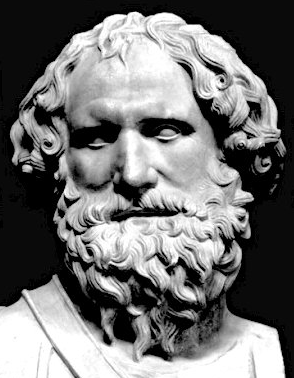
Archimedes: The Father of Mathematics

Summary

  • Birth: c. 287 BC in Syracuse, Sicily (colony of Magna Graecia)
  • Death: c. 212 BC in Syracuse, Sicily (during the Second Punic War)
  • Alias(es): Archimedes of Syracuse
  • Ethnicity: Greek
  • Residence(s): Syracuse, Sicily; Alexandria, Egypt (during school)
  • Language(s): Works were written in Doric Greek (Sicilian)
  • Religion(s): Judaic Christian
  • Father: Phidias/Pheidias (astronomer and mathematician)
  • Mother: Unknown
  • Spouse(s): Unknown
  • Children: Unknown
  • Relatives: King Herion II (unconfirmed), Gelon (unconfirmed)
  • Acquaintances: Conon, Dositheus, Eratosthenes, Heracleides
  • Class/Wealth Notes: Upper
  • Institutions/Degrees: The School of Alexandria
  • Profession(s): Mathematician, engineer, astronomer, physicist, inventor
  • Field(s) of Study: Hydrostatics, Mechanics, Geometry, Calculus, Defense
  • Famous Works: The Sand Reckoner, On the Equilibrium of Planes, On Floating Bodies, On the Measurement of a Circle, On Spirals, On the Sphere and the Cylinder, On Conoids and Spheroids, The Quadrature of the Parabola, Ostomachion, The Method of Mechanical Theorems, Book of Lemmas (Liber Assumptorum), Cattle Problem
  • Legacy: “Eureka!”; known as “The Father of Mathematics”; with Newton and Gauss he is commonly referred to as one of the three greatest mathematicians who ever lived; last words were “Do not disturb my circles”;
  • Cause of Death: Killed in Syracuse, Sicily during the Second Punic War despite orders from the Roman general Marcellus to leave him unharmed. The Greek historian Plutarch reported that Roman soldiers killed Archimedes to steal his scientific instruments. Another version states he was stabbed for ignoring a Roman soldier’s orders because he was too entranced in a geometrical diagram he drew in the sand.
  • Notable Historian(s): Isidore of Miletus, Eutocius, Plutarch, Polybius, Thābit ibn Qurra (Arabic translator), Gerard of Cremona (Latin translator)


Archimedes’ Principle & The First Law of Hydrostatics

Story: Archimedes was tasked to determine if the new crown made for King Herion II was made of solid gold. While taking a bath, he observed the level of water in the tub rise as he got in… leading to his “Eureka!” moment regarding density and displacement.

Science: A body immersed in a fluid experiences a buoyant force equal to the weight of the fluid it displaces. Therefore Archimedes could immerse the crown in water, measure the amount of water displaced, divide it by the weight of the crown, and arrive at the density of the crown.

Impact: Hydrostatics, or the study of the mechanical properties of liquids at rest, was born. Archimedes’ Principle regarding buyancy and density is used throughout science today. It’s used in the building of ships, other industrial manufacturing, and really any type of engineering. Without it, well, we might be “screwed” (see Archimedes’ other works below).


Other Works

  • Archimedes’ Screw – This consists of a long screw enclosed in a cylinder. With tilted so that its bottom tip is placed in the water, turning the screw pushes water up the screw and out the top. This was used to bilge water out of large ship he designed, the Syracusia.
  • Law of the Lever – Achimedes supplied the first real scientific explanation of how levers work in his work titled On The Equilibrium of Planes (although he certainly did not invent levers).
  • Method of Exhaustion and Pi – Archimedes used the “method of exhaustion” to determine approximate areas and volumes of circles. It involves drawing one polygon outside of a circle, and inscribing a similar polygon on the inside of the circle. Since the area of a polygon (at that time) could be worked out more easily than a circle, Archimedes would determine the areas of the polygons, continuously adding more sides to the polygons, computing the new areas, and estimate the area of the circle which falls between those of the inner and outer polygons. This helped him determine an approximation of pi which he set at somewhere between 3.1429 and 3.1408.
  • Spheres and Cylinders – Archimedes, through the use of several means, proved that a sphere had two-thirds the volume and surface area of a cylinder that circumscribes the sphere.
  • Engineering Feats – Archimedes engineered and built several machines, based on the physical properties and relationships he had proven, to help defend Syracuse from the Roman assault. These included giant pulleys and catapults that would lift ships out of the water and shake them up, destroying them (check out the “claw of Archimedes”). He also built a giant mirror that focused the sunlight onto a ship to burn it.


Adsideological Discussion

Archimedes’ life highlights when a needs translates to accomplishments. This is a characteristic of most inventions, because they need money to flourish and inventors need money to succeed and continue inventing. But Archimedes’ accomplishments were much more than this. It seems to me that he was driven by pure curiosity and intellect, a desire to test his mind against science and nature.

At some level, perhaps he spent too little time outside of his passion of mathematics and discovery. A passion is supposed to be a majority consumer of time and energy. However, no legacy really exists, outside of his scientific accomplishments, that tells us about Archimedes the man and Archimedes the neighbor. Perhaps this has something to do with the time frame in which he lived, but a story told is a story told. Regardless, Archimedes was a life changer and contributed an incredible balance of both an immediate impact and a long term impact on society.

Happy Planet Index vs Human Development Index

With my post on “Everything is Connected” I thought I’d investigate a bridge between happiness and the level of development in a country…

The Happy Planet Index (HPI)

“The HPI is an innovative measure that shows the ecological efficiency with which human well-being is delivered around the world. It is the first ever index to combine environmental impact with well-being to measure the environmental efficiency with which country by country, people live long and happy lives.”

The Human Development Index (HDI)

“The first Human Development Report (1990) introduced a new way of measuring development by combining indicators of life expectancy, educational attainment and income into a composite human development index, the HDI. The breakthrough for the HDI was the creation of a single statistic which was to serve as a frame of reference for both social and economic development. The HDI sets a minimum and a maximum for each dimension, called goalposts, and then shows where each country stands in relation to these goalposts, expressed as a value between 0 and 1.”

Thoughts and Hypotheses

There are two relationships we will want to consider:

  • Correlation: Is there any direct relationship (positive or negative) between the values of the HDI and HPI?
  • Clustering: By region (or other characteristic field) can we find any clusters in the data?

Since these are composite indices of several weighted variable inputs, hopefully this top-level approach can identify some possible matches and mismatches between underlying data fields too. Related to the HDI, I bet the UN’s HPI (Human Poverty Index) has a bridge to happiness… or most likely, unhappiness.

Data/Discussion

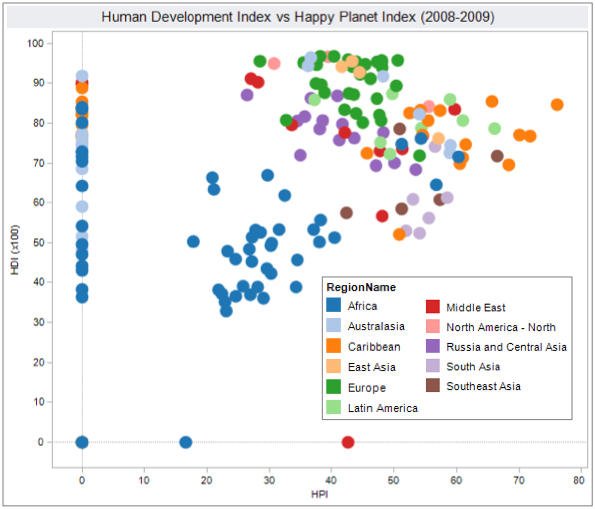
  • There seems to be a connection between deviations in the data. When there exists a large deviation, for a specific region, for the HDI, there seems to also be a large deviation of values for the HPI. Notice that Africa, Australasia, and the Middle East all have similar double-digit deviations. What does this tell us about the range of development and happiness within a specific region? Perhaps this could be tested across many country-level metrics to see if the similar deviations occur more frequently.
  • As with the above note, since we have these metrics on a same scale/range, let’s combine them to see who has the highest composite score. In alphabetical order we have: 84, 125, 138, 137, 133, 134, 126, 134, 119, 117, 119. There seem to be three groups here: High (>130), Medium (100-130), Low (<100). Depending on a user need, algorithms can be created to join metrics to provide a big picture representation of economic, political, sociological, etc metrics, and flexibility can be built to dig into the weeds on the underlying data. This would be a nice comprehensive framework for understanding how countries (and regions as a whole) change over time.


  • Looking at the scatter plot, it is clear that some clusters may exist, for example with Africa (blue). Caribbean (orange), Europe (green), and Russia and Central Asia (purple) also show some quick visual clustering, while the Middle East (red) shows the opposite. What could this mean? That regional trade, policy, weather, etc are good supplementary foundations for providing happiness and development?
  • We could add trend lines and quickly check for any linear (or logarithmic) relationships. If any relationship does exist as a whole or with a region, it is certainly not a directly proportional or inversely proportional one. This was expected as these metrics are quite different (despite the overlap in life expectancy as an input dimension).

Moving forward, the methodologies and underlying dimensions (with their sources) should be compared. Data is always good, but with good data one still must be careful. That being said, this is a good start for a much larger investigation into the connections between different country-level metrics, especially if they are to be used in international and national policy.

Everything Is Connected

Whether it’s love and hate, birds and weather, past and future, or me and you, there are connections – both hidden and in plain sight – in everything. More than ever, we are finding that the world is a web, and I’m not just talking about the internet. That being said, the internet does help us bring some new connections to the surface through data sharing, communication, and information retrieval.

Math is a valuable support mechanism for these types of connections, especially when credible data exists that is representative of both sides of the river. It often can build the bridge to connect the shores, although it cannot always build traffic between the two.

I’ve posted before on the connections of seemingly unrelated phenomena. How can we determine where connections should (and should not) exist? How can we determine the strength and impact (both direct and potential) of such connections? What are the implications of humans controlling such connections and manipulating the bare characteristics by which some things are connected? These are questions to which we may never have an answer, but it’s important to at least ask the questions and attempt the answers. You never know where a new bridge might appear.

Whether its physical, metaphysical, mathematical, sociological, technological, chemical, theological, biological, philosophical, etc. the connections do exist. To start, we know scientific law covers the physical: Newton’s Law of Universal Gravitation tell us that every object in this universe attracts every other object with a force that is directly proportional to the product of their masses and inversely proportional to the square of the distance between their centers. For the others, well, let’s just say the bridges are infinite and are always under construction.

People Studying People

Society is people. Whether it’s business growth, intellectual advancement, government, mass media, artistic culture, knowledge transfer, sports successes, health care, economic development, or charity, it all starts with people. Therefore, in order to learn about how society is shaped and how it can change, it’s imperative that we learn as much as we can about the people who have come before us.

One purpose of my blog is to organize information about influential people of the past and present to try and pass this information on to others. Adsideology very much follows this notion – that life is about people, and we should study people to become people. I do recognize that the more diverse the people, the more wholesome the information gained. However, I’ll probably start with some mathematicians as I’ve recently bought a few books on the great ones in history.

As a start, let’s think of some numbers. Solely focusing on Earth, how many people have ever lived? Most estimates fall around 100 billion total. The interesting note about this number is that with a current population of over 6.7 billion, this means that almost 7% of people ever born in the history of Earth are living today. In other words, only 93% of people ever born have ever died! Pretty wild to think about, right?

On Knowledge Innovation

I want to quickly mention a correlating note regarding knowledge innovation for the future – how new thought can best be stimulated given the current state of society. It is clear that one pillar of innovation will always be people – the human component. Even in a world growing in reliance on information services, the human component will always remain. I’ve posted previously on the need for the human component in future mathematics initiatives as well as the need for expanded human intervention for optimized search technologies. The fact is, the human component will always be there. Common sense, yes, but commonly understood, maybe not.

Links

Future Search Requires Human Intervention

The business of organizing information is a tricky one in that it’s a moving target. It’s hard to tell what will be the next hot topic or consumer need, and the contribution of digital information is not necessarily bound by the structure and rules of those needing that information. Second, the mechanisms by which we wish to access and use information are constantly changing. The world in 2050 won’t be PowerPoint presentations, heat maps and csv exports, just as 1950’s world wasn’t all emails, tweets, and search engines. Lastly, with the emergence and growth of social media and networking, information contribution has dramatically increased. Without providing the statistics, it’s well known that more people are online, and more people are hitting a “Submit”, “Post”, “Send”, or “Tweet” button than ever before. As a result, there are more pieces of information, more individual topics, more ways to categorize information, more uses for information, more ways to see information, and more unknowns about that information than ever before.

That being said, it’s important to not be unnerved by this. Collectively, we are smart enough to guide search technology in the right direction, or at least put it in the right place so that its path is optimized for future generations. And collectively, we are smart enough to ensure that the ways we use information will publicly provide guidance to the development of a optimal suite of available tools for effective visualization and communication. That being said, by focusing on the relative near-term, emerging trends can be detected, understood, and leveraged for advancement in the business of organizing information. Gaining an edge on future trends brings tremendous value and exactly that – edge. Among other methods, the detection of such trends requires quantitative analysis mixed with psychology, history, and good ol’ intuition.

In terms of finding information (and more importantly, relevant information), most people think simple search. Or maybe more specifically, they think Boolean search with some available advanced search options. It’s Google, Bing, Wolfram|Alpha, or some other engine – typing in some logical query, occasionally setting some supporting filters, scrolling through the first ten results, and settling on what looks best by some meta data. This certainly works today, and these search engines may be sufficiently wrapping their arms around the influx of new and changing information. But soon technology reaches a limit. The responsibility must shift back to the human. As the informational requirements become more complex and the underlying data become more specialized, relevancy must become more human-driven. We can’t rely completely on technology to provide us with answers.

This notion is two-fold:

  1. Future queries needs more human input. This means “advanced search” needs to become part of “normal search”. Spending 3 seconds to check a box could save 3 minutes in scanning results. You can obviously set defaults for your regular search, but I’d be interested to see stats on the use of type of search vs time spent scanning results. The distance between the two will only grow with the ever-accelerating growth of internet content.
  2. Future content needs more human organization. About.com, Wikipedia.org, and howstuffworks.com are great examples of this. They are sites that show up in search results that organize information. Wired Magazine had a good article last month on About.com as an “answer factory” (in fact, their motto is “Guidance. Not Guesswork” – I love that). These sites organize thought and mimic the human mind looking for an answer to a question, not a query. Websites and blogs need to organize information about information, and as a result we can increase transferable knowledge and decrease search time.

It’s obvious but important to note that people collectively drive relevancy through thought. Trend topics in Twitter, News Feed on Facebook, Google Hot Trends, etc. are driven by fingers on a keyboard, which are driven by synapses in the brain, which are driven by actions and observations, which are driven by circumstance – and maybe even fate. Technology should not drift too far away or we’ll lose access to the very knowledge we create.

Welcome To The New KevinBerardinelli.com

Please update your bookmarks, RSS readers, etc. and point them to my new site http://kevinberardinelli.com

I have integrated both my blog and my personal website using WordPress as a platform. I previously used Blogger/Blogspot, Google Sites, and a standard html code hosted on a Georgetown web server to make my life public. But now I’m giving the reigns to WordPress as the platform. Hopefully I’ll be able to host the code myself in the near future, but for now I’m happy with the change. If you have any questions about how to use WordPress, how to purchase and manage your own domains, how to blog, or how to start a website, just ask and I’ll be glad to help!

My site will have everything in one spot, new blog posts, scores/schedules/stats for my intramural sport teams, my Twitter feed, my recipes, and other content on topics I’m interested in, such as math and technology.

As a note, my domain http://www.adsideology.com will soon forward to http://kevinberardinelli.com so please use the latter for all your records. Thanks!

Past Images of My Site and Blog